You bought a quality weightlifting belt. You buckle it on. And nothing changes. Sound familiar? The problem is not the belt — it is how you are using it. Proper bracing technique is the difference between a belt that adds 20kg to your squat and a belt that just looks tough.
The Valsalva Manoeuvre: Foundation of Bracing
The Valsalva manoeuvre is a controlled breathing technique that creates maximum intra-abdominal pressure:
- Big belly breath — Inhale deeply, directing air into your belly, not your chest. Your stomach should push outward. Think about filling your torso like a cylinder, expanding in all directions — front, sides, and back
- Close the glottis — Hold that breath by closing the back of your throat. Like you are about to go underwater
- Bear down — Tighten your entire core as hard as possible. Push your abdominal wall outward against the belt in every direction simultaneously
- Lift — Maintain this pressure throughout the entire rep. Do not exhale until the rep is complete
Why Most Lifters Brace Wrong
The most common mistake is breathing into the chest. When you chest-breathe, your shoulders rise and your belly stays flat. This creates zero pressure against the belt. The belt just sits there doing nothing.
The second mistake is bracing only the front. Many lifters push their belly forward but forget about the sides and back. A proper brace pushes outward in 360 degrees — imagine trying to make yourself as wide as possible.
Bracing Drill Without a Belt
Before you even put the belt on, practice this:
- Stand with your hands on your obliques (the sides of your torso)
- Take a big belly breath
- Brace hard — your hands should feel your obliques pushing outward
- Hold for 5 seconds
- Repeat 10 times
Once you can consistently push your obliques outward, you are ready to do this against a belt.
Bracing with the Belt On
The belt amplifies what you are already doing. Here is the complete sequence:
- Set belt tightness — You should be able to fit one finger between the belt and your relaxed belly. When braced, there should be zero gap
- Position the belt — Centred on the navel for squats, slightly higher for deadlifts
- Take your breath — Deep belly breath, expanding in all directions
- Brace against the belt — Push your abs out into the belt from every angle. You should feel the leather resist your expansion
- Verify — If done correctly, you cannot fit a finger between your body and the belt
- Unrack and lift — Maintain the brace throughout the movement
How Tight Should the Belt Be?
This is highly individual, but the general rule is: tight enough that bracing creates strong resistance against the belt, loose enough that you can still take a full belly breath. If the belt prevents you from breathing into your belly, it is too tight. If the belt moves or shifts during a rep, it is too loose.
Breathing Between Reps
On sets of 3 or more, you need to rebrace between reps. At the top of each rep (standing position for squats, lockout for deadlifts), quickly exhale, take a fresh breath, rebrace, and perform the next rep. This takes about 2-3 seconds and becomes automatic with practice.
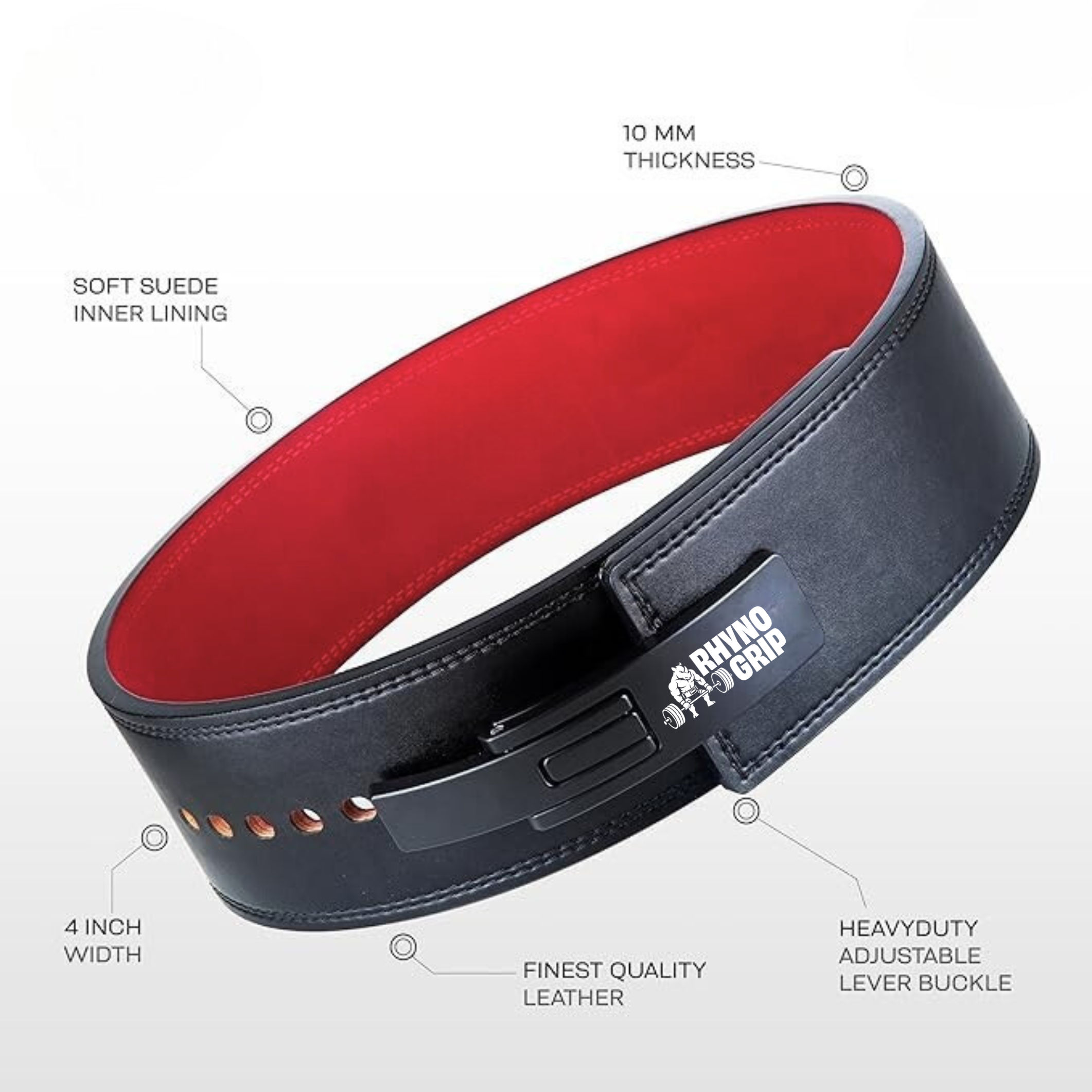
A proper brace starts with a proper belt. The RhynoGrip 10mm Lever Belt provides the perfect rigidity for bracing practice, and the lever mechanism ensures identical tightness every session. Explore the full belt collection to find your fit.